
The Blue-footed Booby (scientific name Sula nebouxii) is a charismatic seabird known for its bright blue feet, comical courtship rituals, and spectacular diving behavior. Though perhaps most famously encountered in the Galápagos Islands, this species also occurs along the Pacific coast of Mexico—including the coasts and islands of Baja California and the Sea of Cortez.
Habitat & Range in Baja California
The Blue-footed Booby is distributed along arid islands and coastal regions of the eastern Pacific, from parts of California down through Mexico, Central America, and South America. In Baja they are found on offshore islets and rocky shores, often in the Sea of Cortez region and nearby islands.
They prefer sites that are free from large predators and human disturbance, where they can safely nest on the ground in small depressions or on bare rock. Because of Baja’s rich marine productivity (especially where up‐wellings occur), these islands provide excellent hunting grounds for seabirds like the Blue-footed Booby.
Identification & Unique Features
Some key identifying features of the species:
- Length: roughly 80–90 cm (31–35 in) from head to tail.
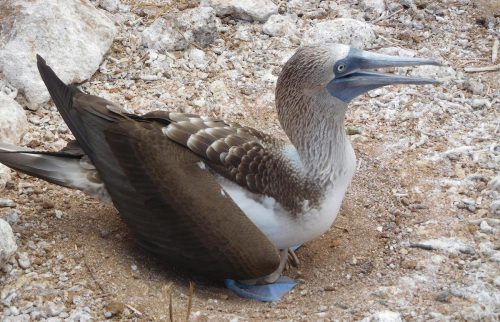
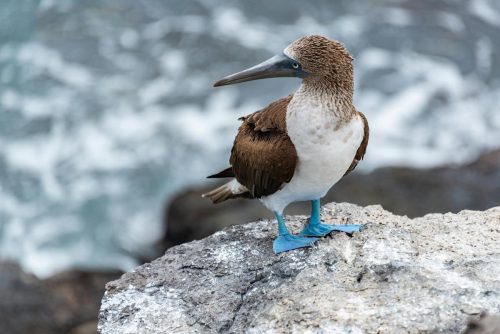
- Plumage: Adults have brown upper wings and back, a white underside, and a lightly streaked neck/head region. Juveniles start off lighter and gain adult plumage gradually.
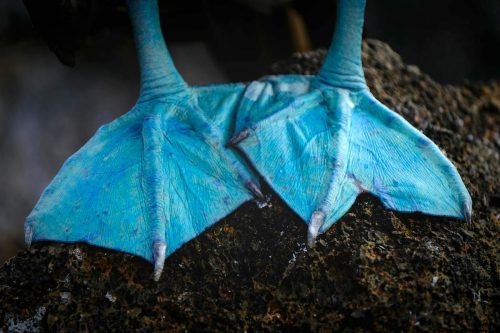
- Feet: Their webbed feet are unmistakably blue (ranging from pale turquoise to deep aquamarine) — the brighter the colour, the healthier the bird.
- Behaviour: On land they may appear awkward (hence “booby” from Spanish bobo meaning “foolish”) but in the water and air they are agile and efficient.
The vivid blue feet are not just for show — they play an important role in courtship and mate selection.
Courtship & Breeding Behaviour
One of the most entertaining aspects of the Blue-footed Booby’s life is the courtship ritual. Males perform a “foot-high stepping” dance, lifting their bright blue feet alternately, spreading their wings, presenting nest materials, and making whistling calls to attract a female.
The intensity of the male’s foot colour is correlated with his health and diet: males with brighter feet tend to be more successful at attracting mates.
Once paired, both male and female take part in nest building (often a shallow scrape on bare ground or rock), egg‐laying (commonly 2–3 eggs), and incubation. One particularly interesting fact: the adults use their feet (with blood vessels and heat) to warm the eggs, instead of the typical brood patch of many birds.
After hatching, both parents feed the chicks by regurgitated fish. The chicks stay in the nest area for a couple of months before fledging. If food is scarce, parents may preferentially feed the largest chick, and smaller siblings may perish—a harsh but real aspect of survival in seabird colonies.
Diet & Hunting Strategy
These seabirds are fish‐eaters and skilled hunters. Their diet in Baja includes small schooling fish like sardines and anchovies, and occasionally squid. To hunt, they often fly low over the water, spot a school of fish, then dive head‐first into the sea, folding their wings back and entering with minimal splash. They can dive from heights of several meters and swim underwater if needed.
Their nostrils are closed permanently (they breathe through corners of beak) and they have special air sacs in the skull to absorb impact from diving.
In the rich waters off Baja’s islands, they may also hunt cooperatively: one bird alerts others by whistling when fish are spotted, then the group dives in together.
Significance in Baja California & Local Ecosystem
In Baja California and the Gulf of California, the Blue-footed Booby represents an important component of the marine‐coastal ecosystem:
- As a seabird predator, it helps regulate small fish populations, and is an indicator of marine‐food‐web health.
- Their presence on islands contributes to nutrient input (via guano) which enriches the otherwise nutrient‐poor island soils, supporting other life forms.
- From a tourism/eco‐tourism perspective, they are an attraction for nature‐lovers, wildlife watchers, and photographers — their bright feet and lively behaviour make them memorable.
Tips for Spotting Them in Baja California
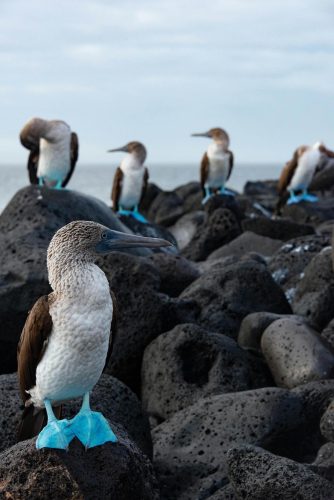
The rugged island of Isla San Pedro Mártir, situated in the central region of the Sea of Cortez is home to what is considered the world’s largest nesting colony of Blue-footed Boobies. However, the island’s remote location makes it difficult to visit. Isla San Jerónimo in the Pacific (southwest of El Rosario) is another large nesting colony for the blue-footed booby but is again difficult to visit due to its remoteness. For tourists, the best bet for seeing them is along the Sea of Cortez and specifically in the La Paz area where the nearby islands such as Isla Espíritu Santo are a great place to see the birds.
If you’re planning a trip and hope to observe Blue-footed Boobies in the Baja area, here are some helpful tips:
- Visit during breeding season or when food is plentiful — you’ll see them more actively diving and courting.
- Bring binoculars or a zoom lens — even though they may rest on rails or boat ladders (as some tour reports mention) they are still somewhat wild birds.
- Respect wildlife etiquette: keep a safe distance, avoid disturbing nesting sites, and follow local guidelines for wildlife viewing.
- If you’re photographing, aim for early morning or late afternoon light to capture the blues of their feet and the action of their dives.
- Consider selecting an eco-tourism operator who is aware of seabird conservation and minimizes disturbance.
The Blue-footed Booby is a fascinating creature whose behavior, ecology, and presence in Baja reflect the health and beauty of the marine environment. In the islands and shores of Baja and the Sea of Cortez it offers a special wildlife‐watching opportunity, and it also reminds us of the need to protect our ocean ecosystems for these and many other species. Keep an eye on those rocky shores and clear blue seas—you might just catch the high-stepping show of the Blue-footed Booby!